Why We Fall Into Habits Without Realizing It
Why repeated actions slip out of conscious control, what brain circuits seem to be involved, and why forming or breaking a habit takes longer than we expect.
Key takeaways
- Habits form when the same action is repeated in the same situation.
- Forming one is slow and uneven, often taking weeks or months rather than days.
- Changes of context may be moments when old habits loosen.
You walk into your room, drop your bag in the same corner, and reach for your phone before you have even sat down. Later you cannot remember doing any of it. Nobody decided, in that moment, to do these things. They simply happened, the way they happen most days.
That is the strange thing about habits. They are behaviors we learned, often on purpose, that end up running with very little input from the part of us that makes plans.
Doing one thing while thinking about another
One of the clearest pictures of everyday habits comes from diary studies in which participants reported, every hour, what they were doing, thinking and feeling. When people were doing something habitual, defined as a behavior performed almost daily in stable contexts, they were likely to be thinking about something unrelated to what they were doing. When the behavior was not a habit, their thoughts tended to match their actions, which the authors took as a sign that thought was needed to guide the action. Habitual behavior was also linked to lesser feelings of stress.
In other words, a habit frees up attention. That is useful when you are brushing your teeth while planning your day. It is also why habits can slip past us unnoticed.
The context pulls the trigger
Habits seem to be tied less to what we want and more to where we are. In one study, researchers followed students who transferred to a new university. Their exercising, newspaper reading and TV watching habits survived the move only when aspects of the performance context did not change, for example when they kept reading the paper with other people. When the context did change, the disruption sometimes placed behavior under intentional control, so that participants acted on their current intentions.
One interpretation is that habits are stored as links between a situation and a response. The situation (your room, a time of day, the phone on your desk) acts as the cue, and the response follows without much deliberation.
A shift inside the brain
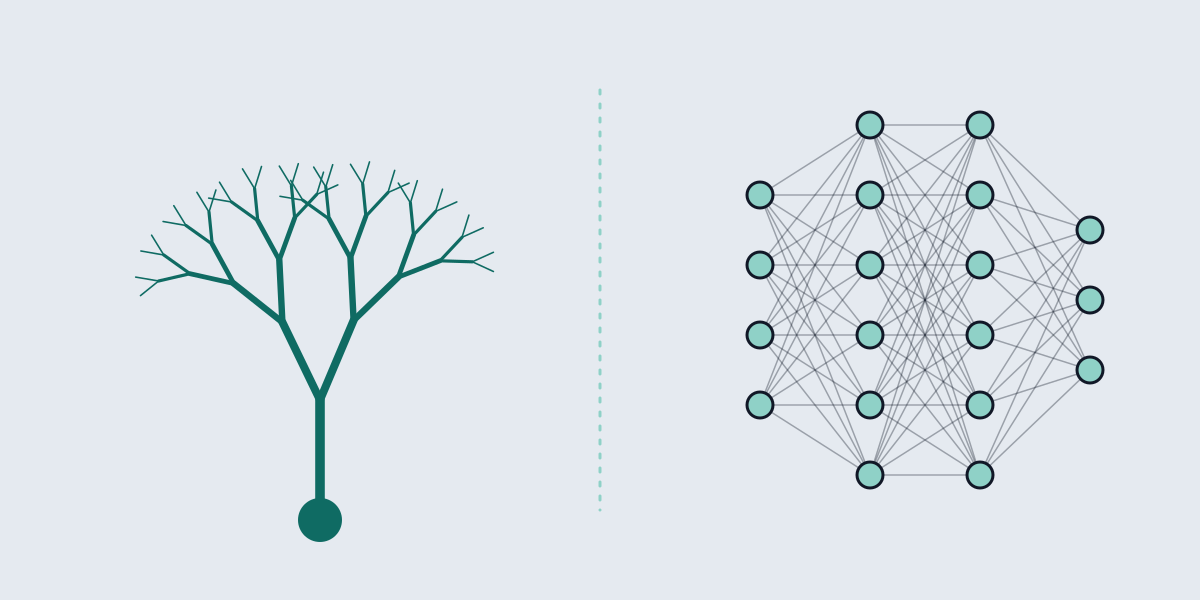
Neuroscientists often describe two systems for controlling actions. In goal-directed control, you do something because you want its result. In habitual control, a cue triggers the action whether or not you still want the result.
A standard test of the difference is to make the reward less appealing and see whether the behavior changes. In a 2009 brain-imaging study, participants learned to press buttons for food rewards. After extensive training, their behavior became less sensitive to a reduction in the value of the reward, a hallmark of habit. Over training, a region in the right posterior putamen became increasingly responsive to the task cues. The putamen is part of the striatum, a set of structures deep in the brain. The authors suggested that this region may contribute to the habitual control of behavior in humans.
Animal studies give a more detailed view. In rats learning a maze, overtraining induced a shift from purposeful to habitual behavior. Neurons in the sensorimotor striatum developed an “action-bracketing” pattern, firing strongly at the start and end of the run, as if the whole sequence had been packaged as one unit. A similar pattern appeared later in a part of the frontal cortex called the infralimbic cortex, and disrupting infralimbic activity with light-based (optogenetic) methods during overtraining prevented habit formation. The researchers proposed that both regions are needed for a habit to “crystallize”. These are rat experiments, so they suggest how the process might work rather than showing exactly what happens in people.
When the lab cannot make a habit
Here the story gets less tidy. A research team tried five times to show that extra training produces rigid habits in healthy humans, including two independent attempts to replicate the original 2009 demonstration. That original study had 31 participants, comparing one day of training with three days. In all five experiments, extensive training did not lead to greater habits. The authors concluded that these lab procedures may be insensitive to the duration of training in humans, and they discussed why habits are hard to create in an experiment.
This does not mean human habits are imaginary. Everyday experience and the diary research above suggest they are common. It does mean that the precise brain mechanism in humans is less settled than the clean two-system picture implies, and that a few days of button pressing may be a poor stand-in for years of real routines.
How long does a habit take to form?
You may have heard that it takes 21 days to form a habit. One widely cited real-world study does not support a single number. In that study, 96 volunteers chose an eating, drinking or activity behavior to do daily in the same context, such as “after breakfast,” for 12 weeks, and rated how automatic it felt each day. Of the 96, 82 provided sufficient data, and the model fitted 62, of whom 39 showed a good fit. Among those participants, the time to reach 95% of their personal peak of automaticity ranged from 18 to 254 days, with a median of 66 days. Encouragingly, missing one opportunity did not materially affect the habit formation process.
A 2024 systematic review pulled together 20 studies involving 2,601 participants. Where studies reported a typical time, the medians were 59 to 66 days and the means 106 to 154 days, with individual times from 4 to 335 days. The review also found that morning practices and self-selected habits generally showed greater strength. Its authors note important limits: most studies had a high risk of bias, and the number of studies was relatively small.
What we still do not know
Much of the evidence on how long habits take relies on people rating how automatic a behavior feels, which is not the same as measuring automaticity directly. The brain research mixes human imaging, which shows correlations, with animal experiments that can test causes but may not translate neatly to people. And as the failed lab attempts show, scientists still lack a reliable way to create and measure a habit in healthy humans under controlled conditions. It is also unclear how much of what we call “breaking a habit” is weakening an old cue-response link versus building a new one on top of it.
The takeaway
Habits form when the same action is repeated in the same situation until the situation itself starts the action. This saves mental effort, which is why we often do habitual things while thinking about something else entirely. Research suggests the striatum plays an important role, though the human evidence is less complete than the animal work. The real-world studies point to a slow, uneven process that differs a lot from person to person, often taking weeks or months rather than days. One practical implication, suggested by the university-transfer study, is that changes of context, like a new school year or a new room, may be moments when old habits loosen and new ones are easier to start.
References
- Habits in everyday life: thought, emotion, and action. Wood W, Quinn JM, Kashy DA, Journal of Personality and Social Psychology 83(6):1281–1297, 2002. doi:10.1037/0022-3514.83.6.1281
- Changing circumstances, disrupting habits. Wood W, Tam L, Witt MG, Journal of Personality and Social Psychology 88(6):918–933, 2005. doi:10.1037/0022-3514.88.6.918
- A specific role for posterior dorsolateral striatum in human habit learning. Tricomi E, Balleine BW, O'Doherty JP, European Journal of Neuroscience 29(11):2225–2232, 2009. doi:10.1111/j.1460-9568.2009.06796.x
- A dual operator view of habitual behavior reflecting cortical and striatal dynamics. Smith KS, Graybiel AM, Neuron 79(2):361–374, 2013. doi:10.1016/j.neuron.2013.05.038
- Shifting the balance between goals and habits: Five failures in experimental habit induction. de Wit S, Kindt M, Knot SL, et al., Journal of Experimental Psychology: General 147(7):1043–1065, 2018. doi:10.1037/xge0000402
- How are habits formed: Modelling habit formation in the real world. Lally P, van Jaarsveld CHM, Potts HWW, Wardle J, European Journal of Social Psychology 40(6):998–1009, 2010. doi:10.1002/ejsp.674 (archived copy of the publisher's abstract page)
- Time to Form a Habit: A Systematic Review and Meta-Analysis of Health Behaviour Habit Formation and Its Determinants. Singh B, Murphy A, Maher C, Smith AE, Healthcare 12(23):2488, 2024. doi:10.3390/healthcare12232488