Why Rejection Can Feel Like Physical Pain
Being left out can hurt in a way that feels almost physical. What brain research shows about the overlap between rejection and pain, and the debate over it.
Key takeaways
- Rejection is a real threat signal for a social species and engages brain systems involved in distress.
- Early research suggested the brain reuses pain machinery for social hurt.
- Later studies suggest rejection and pain overlap broadly but may differ in finer detail.
We talk about rejection in the language of injury. Someone “hurt our feelings,” a comment “stung,” being left out of a group chat “felt like a punch to the gut.” These phrases raise a fair question: is the pain of rejection just a figure of speech, or does the brain treat being rejected a bit like being physically hurt?
For about two decades, neuroscientists have tried to answer that question. The story that emerged is fascinating, but it is also one of the clearest examples in modern brain science of researchers looking at the same data and disagreeing about what it means.
A simple game that reliably hurts
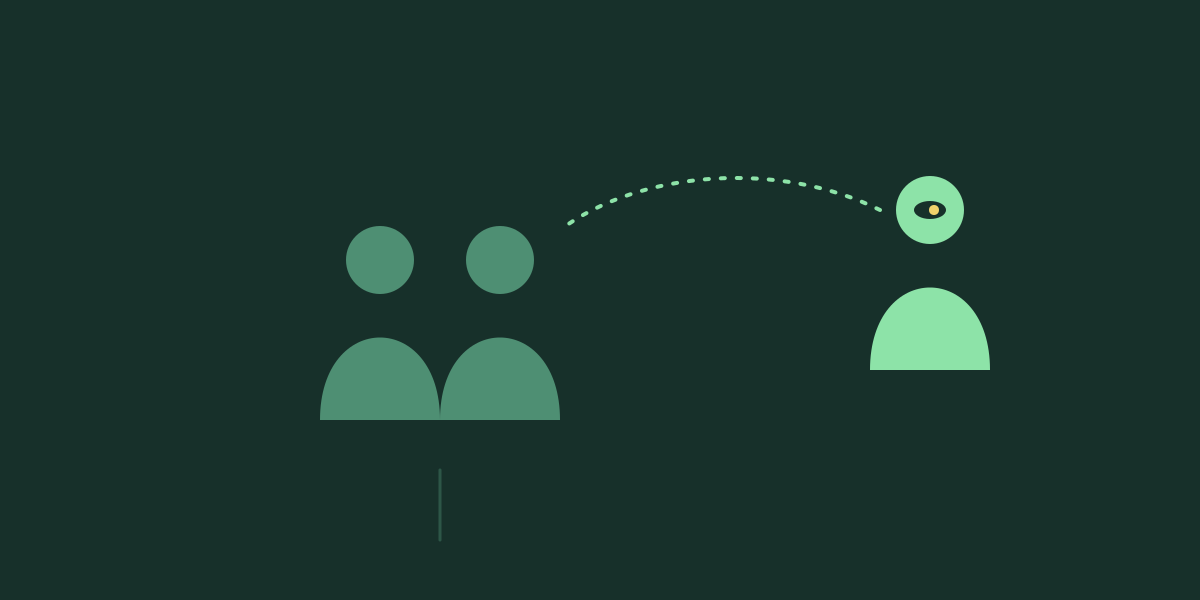
Much of this research uses a computer game called Cyberball. A participant plays catch with what they believe are two other people. At first the ball is shared, but then the other players stop throwing it to the participant. It sounds trivial. It is not.
A meta-analysis of 120 Cyberball studies with 11,869 participants found that the average effect of being ostracized, or excluded, was large, and that it held across differences in the number of players, how long the exclusion lasted, and participants’ gender, age and country. Being left out of a pointless game with strangers reliably makes people feel worse. That alone says something about how sensitive humans are to social exclusion.
The “social pain” idea
In a widely cited 2003 study, researchers scanned people while they were excluded during Cyberball. As a later review describes it, they found increased activity in the dorsal anterior cingulate cortex (dACC), the anterior insula and the right ventral prefrontal cortex during exclusion compared with inclusion. Because the dACC was already known to be active during physical pain, this finding was interpreted to suggest that exclusion is experienced as “painful,” and led to the hypothesis that social and physical pain share neural circuitry.
This became known as the social pain overlap idea. A major review by one of the original authors argued that the painful feelings associated with social disconnection rely on some of the same neurobiological substrates that underlie physical pain. From an evolutionary point of view, the idea is appealing. For a social species, being cut off from the group could be as dangerous as an injury, so a system that makes exclusion feel bad could help keep us connected. That is a hypothesis about why the overlap might exist, not something brain scans can prove directly.
Going beyond distress
Earlier work had suggested that rejection and pain share brain regions that support the affective, or emotional, side of pain but not its sensory side. A 2011 study pushed further. People who had recently been through an unwanted breakup viewed photos of their ex-partner while thinking about the rejection, and in other trials felt painful heat on their arm. When rejection was evoked this strongly, areas that support the sensory components of physical pain, the secondary somatosensory cortex and dorsal posterior insula, became active. Comparing their results with a database of over 500 studies, the authors reported that activation in these regions was highly diagnostic of physical pain, with positive predictive values up to 88%.
Then the debate began
Overlap in brain scans does not necessarily mean the brain is doing the same thing. A region can be active during two experiences for different reasons, much as a busy train station serves passengers heading in different directions.
In 2014, a team that included authors of the 2011 study tested this directly with 60 participants. Instead of asking whether the same areas lit up, they used pattern classifiers, computer programs that learn the detailed pattern of activity associated with an experience. The classifiers distinguished pain and rejection from their control conditions with 92% and 80% accuracy, but the rejection classifier performed at chance on pain, and vice versa. Even within the dACC, pain- and rejection-related patterns were uncorrelated. The authors concluded that rather than co-opting pain circuitry, rejection involves distinct affective representations.
A second argument concerned what the dACC does in general. In 2015, two leading social pain researchers analyzed a database of over 10,000 brain-imaging studies and concluded that the best psychological description of dACC function was related to pain, not executive control, conflict or salience. They suggested that physical pain may be one example of a broader class of survival-relevant goals monitored by the dACC.
A group of ten neuroscientists quickly challenged this. They argued that the conclusion contradicts a large body of evidence showing robust dACC responses to nonpainful conditions, and that only a small minority of dACC neurons are pain-related. They also criticized the statistical method and estimated, using the same database, that the probability of a study involving physical pain given activity in that area was about 12%, on par with language, emotion, attention and memory. The original authors and two colleagues replied that the critics had asked a different question. They argued that pain needs to be compared fairly with topics that have more studies in the database, and that after this correction pain still had a stronger link to the dACC than executive, conflict or salience processes. The disagreement has not been fully settled.
What the larger body of Cyberball studies shows
Meta-analyses can help when individual studies disagree. A 2021 analysis combined 53 Cyberball brain-imaging studies with a total of 1,817 participants. It found consistent activity in the ventral anterior cingulate and posterior cingulate cortex, frontal regions and the posterior insula, but no reliable activity in the dACC, and fewer than 15% of studies reported peak activity there. The pattern it did find matched the layout of the default network, and a database comparison linked it to terms such as social, autobiographical, mental states and theory of mind, which suggests that being excluded engages systems for thinking about ourselves and other people. Its authors cautioned against treating the dACC as a key region in social exclusion, while noting that their results are limited to Cyberball and that other kinds of exclusion tasks have reported dACC activity.
Expectations can ease both kinds of pain
Even if rejection and physical pain are processed differently, they may respond to some of the same influences. In a placebo study of people who had recently been romantically rejected, a placebo treatment reduced both the social pain of the rejection and physical pain, and increased activity in the dorsolateral prefrontal cortex in both cases. This suggests that the brain’s systems for regulating distress may work across different kinds of hurt.
What is still uncertain
Researchers broadly agree that rejection is genuinely distressing and that it engages brain systems involved in emotion and in thinking about others. What remains contested is how much rejection truly shares with physical pain. Part of the problem is scale: functional MRI tracks activity across whole regions, and the dACC alone contains roughly 550 million neurons that code for a broad range of mental processes. Similar-looking activity does not guarantee a shared mechanism. Most studies also rely on brief lab experiences, such as a ball-tossing game, that are much milder than real-world rejection.
The takeaway
Rejection can feel like physical pain partly because it is a real, powerful threat signal for a social species, and because it engages brain systems involved in distress. Early research suggested that the brain might reuse its pain machinery for social hurt. Later and larger studies suggest the picture is more complicated: rejection and pain overlap in some broad regions but may be represented differently in finer detail. Either way, the ache of being left out is not imagined. If rejection or loneliness feels overwhelming for a long stretch, talking with someone you trust, or with a counselor, can help.
References
- The ordinal effects of ostracism: a meta-analysis of 120 Cyberball studies. Hartgerink CH, van Beest I, Wicherts JM, Williams KD, PLoS ONE 10(5):e0127002, 2015. doi:10.1371/journal.pone.0127002
- Social exclusion reliably engages the default network: a meta-analysis of Cyberball. Mwilambwe-Tshilobo L, Spreng RN, NeuroImage 227:117666, 2021. doi:10.1016/j.neuroimage.2020.117666
- The pain of social disconnection: examining the shared neural underpinnings of physical and social pain. Eisenberger NI, Nature Reviews Neuroscience 13(6):421–434, 2012. doi:10.1038/nrn3231
- Social rejection shares somatosensory representations with physical pain. Kross E, Berman MG, Mischel W, Smith EE, Wager TD, Proceedings of the National Academy of Sciences 108(15):6270–6275, 2011. doi:10.1073/pnas.1102693108
- Separate neural representations for physical pain and social rejection. Woo CW, Koban L, Kross E, et al., Nature Communications 5:5380, 2014. doi:10.1038/ncomms6380
- The dorsal anterior cingulate cortex is selective for pain: results from large-scale reverse inference. Lieberman MD, Eisenberger NI, Proceedings of the National Academy of Sciences 112(49):15250–15255, 2015. doi:10.1073/pnas.1515083112
- Pain in the ACC?. Wager TD, Atlas LY, Botvinick MM, et al., Proceedings of the National Academy of Sciences 113(18):E2474–E2475, 2016. doi:10.1073/pnas.1600282113
- Reply to Wager et al.: Pain and the dACC: The importance of hit rate-adjusted effects and posterior probabilities with fair priors. Lieberman MD, Burns SM, Torre JB, Eisenberger NI, Proceedings of the National Academy of Sciences 113(18):E2476–E2479, 2016. doi:10.1073/pnas.1603186113
- Frontal-brainstem pathways mediating placebo effects on social rejection. Koban L, Kross E, Woo CW, Ruzic L, Wager TD, Journal of Neuroscience 37(13):3621–3631, 2017. doi:10.1523/JNEUROSCI.2658-16.2017