The Neuroscience of Jealousy
Jealousy can flare up in seconds when a bond feels threatened. What studies in people, monkeys and even dogs suggest about where it comes from.
Key takeaways
- Jealousy seems to be an old emotion, with versions that may appear in dogs and pair-bonded monkeys.
- It appears to involve stress hormones, social-threat circuits and motivation systems.
- A twinge is common; controlling or frightening jealousy is worth talking through with someone.
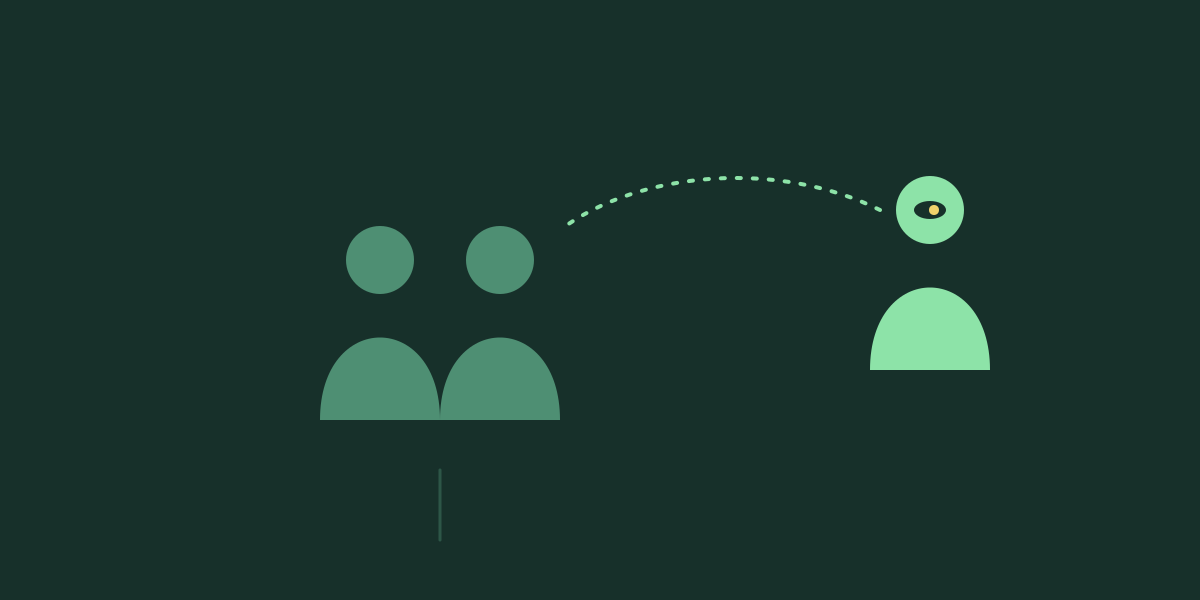
Your best friend starts spending every lunch with someone new. Your partner laughs a little too long at another person’s joke. Nothing terrible has happened, but your stomach tightens and your mind starts running through scenarios. That uncomfortable mix of fear, anger and hurt is jealousy.
Jealousy is often mixed up with envy, which is about wanting something another person has, such as their grades or their phone. Jealousy is different: researchers note that most theorists agree it requires a social triangle, arising when an interloper threatens an important relationship. One common research definition describes it as a perceived threat of losing a valued relationship to a real or imagined rival. Many scientists think of it as an emotion that evolved to protect social bonds from interlopers, which may help explain why it can feel so urgent.
Jealousy is not only human
If jealousy exists to protect social bonds, you might expect to see something like it in other social animals, and researchers have looked.
In one experiment, 36 dogs watched their owners ignore them and instead give affection to one of three things: a realistic stuffed dog that barked and wagged its tail, a jack-o’-lantern pail, or a book. The dogs showed significantly more jealous behaviors, such as snapping, getting between the owner and the object, and pushing or touching the owner or the object, when the owner was affectionate toward what appeared to be another dog. One-fourth of the dogs snapped at the stuffed dog during the interaction, while only one dog did so in the other two conditions. The authors suggested that jealousy may have a “primordial” form that exists in human infants and in at least one other social species.
Of course, we cannot ask a dog what it feels. These are behaviors that look like jealousy, and the interpretation is debated. Still, the results fit the idea that jealousy does not require complex human thinking to get started.
A look inside a jealous monkey’s brain
Coppery titi monkeys are a useful species for this question because they form strong pair bonds and show mate-guarding and agitation when separated from their partner. In one study, researchers let eight male titi monkeys watch either their own female partner sitting next to a stranger male (the “jealousy” condition) or a stranger female next to a stranger male (the control). They then measured brain activity using a type of PET scan, which tracks how much sugar different regions are using.
In the jealousy condition, the right lateral septum and the left posterior and anterior cingulate cortex showed higher activity. There was also some evidence of lower activity in the right medial amygdala, but that result was weaker than the others and comes from one small study. Levels of the hormones testosterone and cortisol were also higher, and males that spent longer looking at their partner beside the stranger had higher cortisol, a hormone involved in stress responses. The authors noted that the lateral septum has been linked to mate-guarding and mating-related aggression in monogamous rodents, and the cingulate cortex to territorial behavior.
This suggests that in a pair-bonding primate, a threat to the bond engages both stress systems and brain regions involved in social behavior. With only eight animals, though, it is an early and limited result.
What the human brain shows
Jealousy is hard to create in the lab, so earlier research relied mostly on hypothetical scenarios and memories of past jealousy. One research team found a workaround: they adapted a computer ball-tossing game called Cyberball, normally used to study being left out, so that it could evoke jealousy, with a computer-generated person doing the rejecting. In the brain-measurement part of the study, greater jealousy was correlated with greater relative left frontal cortical activation. The researchers interpreted this as a sign that jealousy is associated with approach motivation, the urge to move toward something rather than away from it. In other words, jealousy may push people to act to protect the relationship, rather than simply withdraw.
A 2021 review of the human research summarized the picture more broadly. It notes that only a small number of neuroimaging studies exist, but that studies in both clinical and healthy groups point to altered fronto-striatal responsivity, meaning changes in how circuits linking the frontal cortex and the striatum (a deep structure involved in reward and habits) respond. In healthy people, evoked jealousy has been accompanied by increased activation in the basal ganglia and frontal lobe. The review also describes work by its own authors finding that people higher in trait romantic jealousy showed greater activity in frontal, striatal, insula and other regions in response to angry, but not other emotional, faces. One interpretation is that more jealous people may be more sensitive to signs of social threat.
Do men and women feel it differently?
A famous claim in evolutionary psychology is that men are more upset by sexual infidelity and women by emotional infidelity. The evidence is genuinely contested. Studies that force people to choose between the two types of infidelity often find a sex difference, but studies using continuous rating scales have often produced nonsignificant results, leading some critics to argue that the difference is an artifact of the forced-choice method. The supporting side disagrees: the authors of one study report that a meta-analysis of 45 samples using continuous measures found a significant, theory-supportive average effect, which they take as evidence that the difference is not just a product of the method. The reported average effect (g* = 0.258) is small by common statistical conventions, so even on this account the gap between men and women is modest.
Even researchers who support an evolved sex difference report that it has limits. In one web-based study, heterosexual women and men showed the expected difference when imagining an opposite-sex infidelity but not when imagining a same-sex infidelity, and lesbians and gay men showed no sex difference in either case. That pattern suggests that, whatever the cause, any difference is far from a simple “men versus women” rule.
Can a hormone turn jealousy down?
The 2021 review also discusses oxytocin, a hormone involved in social bonding. It reports that in healthy people, intranasal oxytocin has been found to reduce romantic jealousy evoked in imagined or real contexts, and suggests it may one day be useful for pathological jealousy, an extreme form that, in its delusional version, is recognized as a psychiatric disorder. That is an intriguing idea, but it should be weighed against a broader statistical critique concluding that human nasal-spray oxytocin studies are generally underpowered, and that most published findings may not represent true effects. For now, it is a research question, not a treatment.
What we still do not know
Human brain studies of jealousy are few and small, and many rely on imagined scenarios rather than real relationships. Animal studies can measure the brain more directly, but they can only infer emotions from behavior. Researchers also have not settled how much jealousy differs between people because of biology, personality, culture or past experiences in relationships.
The takeaway
Jealousy seems to be an old emotion, with versions that may appear in dogs and pair-bonded monkeys. In the brain, it appears to involve stress hormones, circuits that monitor social threats, and frontal and striatal systems linked to motivation, which may explain why jealousy pushes us to do something rather than sit still. Feeling a twinge of jealousy is common. When jealousy becomes controlling, constant or frightening, though, it is worth talking to someone you trust or to a qualified counselor.
References
- Jealousy: novel methods and neural correlates. Harmon-Jones E, Peterson CK, Harris CR, Emotion 9(1):113–117, 2009. doi:10.1037/a0014117
- Jealousy in dogs. Harris CR, Prouvost C, PLoS ONE 9(7):e94597, 2014. doi:10.1371/journal.pone.0094597
- Imaging, behavior and endocrine analysis of "jealousy" in a monogamous primate. Maninger N, Mendoza SP, Williams DR, et al., Frontiers in Ecology and Evolution 5:119, 2017. doi:10.3389/fevo.2017.00119
- Neural and molecular contributions to pathological jealousy and a potential therapeutic role for intranasal oxytocin. Zheng X, Kendrick KM, Frontiers in Pharmacology 12:652473, 2021. doi:10.3389/fphar.2021.652473
- A reproductive threat-based model of evolved sex differences in jealousy. Sagarin BJ, Becker DV, Guadagno RE, Wilkinson WW, Nicastle LD, Evolutionary Psychology 10(3):487–503, 2012
- Statistical and methodological considerations for the interpretation of intranasal oxytocin studies. Walum H, Waldman ID, Young LJ, Biological Psychiatry 79(3):251–257, 2016. doi:10.1016/j.biopsych.2015.06.016