The Organized Mind: How Structure and Maintenance Keep You Neurologically Healthy
A deep dive into the neuroscience of order, habit, and mental clarity.
Key takeaways
- A cluttered space and an out-of-control schedule can keep the brain's stress system on alert.
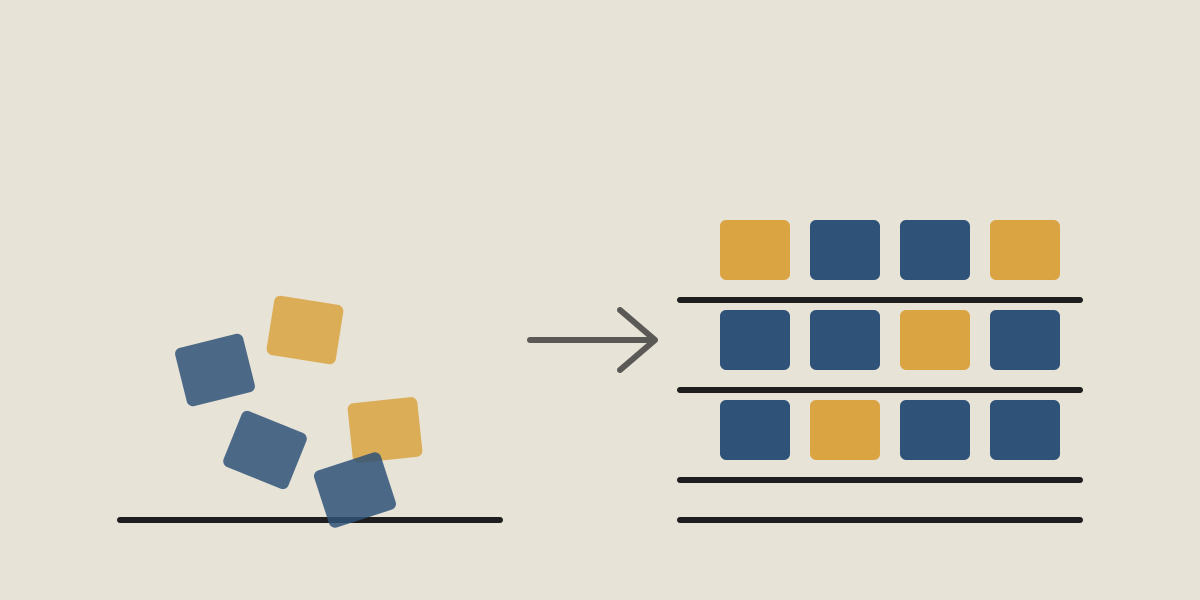
- Routines free the prefrontal cortex from managing basics, leaving room for deeper thinking.
- Organize your space, your time, your digital life, your commitments and your thoughts.
Introduction: Your Brain Is Not Built for Chaos
We live in an era of overwhelming input — overflowing inboxes, cluttered spaces, packed schedules, and a thousand half-finished tasks competing for our attention. Most people treat disorganization as a minor inconvenience, a personality quirk, or simply “how they are.” But neuroscience tells a very different story.
The state of your external environment and daily routines has a profound, measurable impact on the structure and function of your brain. Organization isn’t just a productivity tool. It is, at its core, a neurological health practice.
Part I: What Disorganization Does to the Brain
The Cortisol Connection
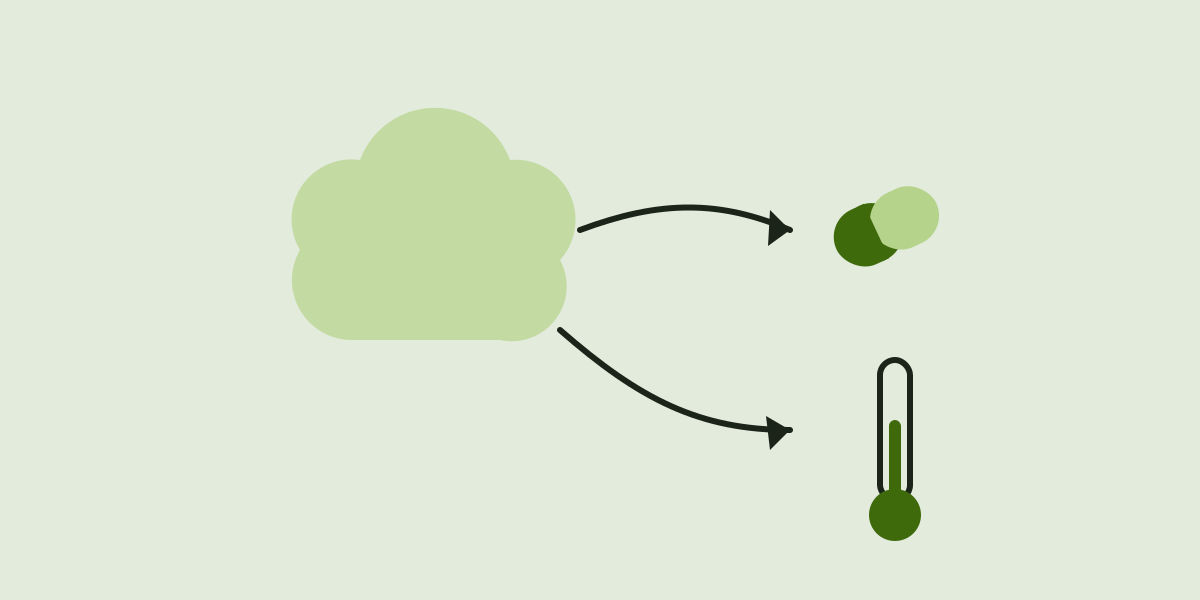
When your environment is cluttered or your life feels out of control, your brain reads it as a threat. The amygdala, your brain’s alarm system, activates, triggering a release of cortisol, the primary stress hormone. This isn’t a metaphor: researchers at UCLA’s Center on Everyday Lives of Families found that women whose descriptions of their homes used more words about clutter and unfinished projects had flatter daily cortisol patterns, a profile associated with poorer health, compared to those who described their spaces as more restful.
Chronic cortisol elevation damages the hippocampus (the brain’s memory and learning hub), impairs prefrontal cortex function (responsible for decision-making and emotional regulation), and accelerates cognitive aging.
Decision Fatigue and the Depleted Prefrontal Cortex
Every unresolved item in your environment — a pile of unsorted papers, an unscheduled task floating in your head, a drawer that “needs sorting someday” — occupies what psychologists call an open loop. Open loops demand low-level cognitive monitoring. Your prefrontal cortex quietly tracks each one, burning glucose and mental bandwidth even when you’re not consciously thinking about it.
This leads to decision fatigue, the well documented phenomenon where the quality of your decisions deteriorates sharply after prolonged mental effort. An organized life closes those loops. It reduces the number of micro decisions your brain has to manage, preserving cognitive resources for what actually matters.
Attention Fragmentation
Visual clutter competes for your attentional resources. Neuroscientists at Princeton University found that multiple stimuli in your visual field — even peripheral ones — fight for neural representation in the cortex. A disorganized space literally makes it harder to focus, think clearly, and sustain attention. Your brain is too busy processing background noise to go deep on anything.
Part II: What Organization Does to the Brain
It Activates the Brain’s Reward System
Completing an organizational task — sorting, tidying, planning, finishing — triggers a dopamine release. Dopamine, the brain’s primary motivation and reward neurotransmitter, reinforces the behavior and creates a sense of satisfaction. This is why making your bed in the morning, mundane as it sounds, genuinely improves mood and motivation for the rest of the day. You’ve already won once. The brain wants to win again.
It Strengthens Neural Pathways Through Routine
Habits and routines aren’t just convenient — they are neurologically efficient. When you perform a repeated, organized behavior, the brain encodes it into the basal ganglia, reducing the need for conscious effort. This is called automaticity. Organized routines free up the prefrontal cortex from managing basics, allowing higher-order thinking — creativity, problem-solving, deep focus — to flourish.
Every consistent system you build in your life is, in effect, neural infrastructure.
It Reduces Cognitive Load and Enhances Memory
When your environment has a place for everything and everything is in its place, your brain doesn’t have to remember where things are. This sounds trivial until you realize how much cognitive energy location-tracking quietly consumes. Organized physical and digital spaces reduce the burden on working memory, which has a very limited capacity, and free it for processing, comprehension, and creation.
It Regulates the Nervous System
Order and predictability are profoundly calming to the nervous system. The brain is fundamentally a prediction machine — it constantly models the near future to prepare appropriate responses. When your environment and schedule are organized, your brain’s predictions are more often correct, reducing the need for reactive stress responses. A structured day keeps your autonomic nervous system in a state of calm alertness rather than chronic low-grade fight-or-flight.
Part III: The Key Areas of Life to Organize, and Why Each One Matters Neurologically
Your Physical Space
Your environment is an extension of your mind. A clean, ordered space reduces amygdala activation, lowers cortisol, and signals safety to your nervous system. You don’t need a minimalist aesthetic — you need intentional space. Know where things are. Keep surfaces clear enough to think. Create dedicated zones for work, rest, and creativity, because your brain uses environmental cues to shift between cognitive states.
Your Time and Schedule
Time disorganization is one of the greatest sources of chronic cognitive stress. An unplanned day leaves you reacting rather than acting, which keeps the brain in a reactive, high-alert state. Block your time. Prioritize deliberately. Build transition rituals between tasks. A structured schedule doesn’t suppress spontaneity — it creates the mental space in which genuine spontaneity becomes possible, because your brain isn’t scrambling to figure out what to do next.
Your Digital Environment
The average person checks their phone over 90 times a day, many of those triggered by notifications that serve no meaningful purpose. A disorganized digital life — a chaotic inbox, a desktop littered with files, apps with constant pings — produces the same attention fragmentation and cortisol spikes as physical clutter, only with higher frequency. Organize your digital tools: batch your email, turn off non-essential notifications, structure your file system, and protect your attention as the finite neurological resource it is.
Your Commitments and Relationships
Social and emotional disorganization — overcommitting, failing to communicate boundaries, leaving relational tensions unaddressed — generates persistent psychological stress that is neurologically indistinguishable from physical danger. Organizing your commitments means saying no with clarity, communicating expectations, and regularly auditing whether your social obligations reflect your actual values and energy. Boundaries, neurologically speaking, are protective.
Your Thoughts and Inner Life
Mental organization matters as much as external organization. Journaling, planning, and reflective practices externalize internal chaos, moving unprocessed thoughts out of active memory and onto paper. This practice — known in psychology as expressive writing — has been shown to reduce intrusive thoughts, lower anxiety, improve immune function, and increase psychological resilience. The organized mind tends to its inner world as deliberately as its outer one.
References
- No place like home: home tours correlate with daily patterns of mood and cortisol. Saxbe DE, Repetti R, Personality and Social Psychology Bulletin 36(1):71–81, 2010 (archived copy of the publisher's abstract page). doi:10.1177/0146167209352864
- Stress signalling pathways that impair prefrontal cortex structure and function. Arnsten AFT, Nature Reviews Neuroscience 10(6):410–422, 2009. doi:10.1038/nrn2648
- Interactions of top-down and bottom-up mechanisms in human visual cortex. McMains S, Kastner S, Journal of Neuroscience 31(2):587–597, 2011. doi:10.1523/JNEUROSCI.3766-10.2011
- A dual operator view of habitual behavior reflecting cortical and striatal dynamics. Smith KS, Graybiel AM, Neuron 79(2):361–374, 2013. doi:10.1016/j.neuron.2013.05.038
- The Magical Mystery Four: How is Working Memory Capacity Limited, and Why?. Cowan N, Current Directions in Psychological Science 19(1):51–57, 2010. doi:10.1177/0963721409359277
- Emotional and physical health benefits of expressive writing. Baikie KA, Wilhelm K, Advances in Psychiatric Treatment 11(5):338–346, 2005. doi:10.1192/apt.11.5.338