Why Do We Sometimes Feel Like We’ve Lived a Moment Before? (Déjà vu)
Déjà vu is a brief, eerie sense of having lived a moment before. Here is what memory research and brain recordings suggest is going on.
Key takeaways
- Déjà vu seems to arise when familiarity fires without a matching memory.
- Brain recordings point to the medial temporal lobes around the hippocampus.
- A forgotten resemblance between a new scene and an old one can be enough to trigger it.
You walk into a café you have never visited, someone laughs at the next table, and for a few seconds everything feels strangely familiar, as if you have lived this exact moment before. You know you haven’t. The feeling fades almost as quickly as it came, leaving you slightly unsettled.
That experience has a name: déjà vu, French for “already seen.” It is one of the stranger tricks the mind plays, and for a long time it was treated as a curiosity that was hard to study, because it is brief, unpredictable and private. Over the past two decades, though, researchers have found ways to examine it more closely, and a clearer picture is starting to form.
How common is it?
Déjà vu is very common. A major review of a century of surveys estimated that about 60% of people have experienced it, and other researchers put the figure at roughly two-thirds. A 2024 meta-analysis, which pooled results from 46 studies, estimated that 74% of healthy people have had déjà vu. The exact number depends on how the question is asked, but the conclusion is the same: if you have felt it, you are in the majority.
The same review found that déjà vu becomes less frequent with age and appears to be linked with stress and fatigue. In other words, younger people tend to report it more often than older people.
Familiarity without memory
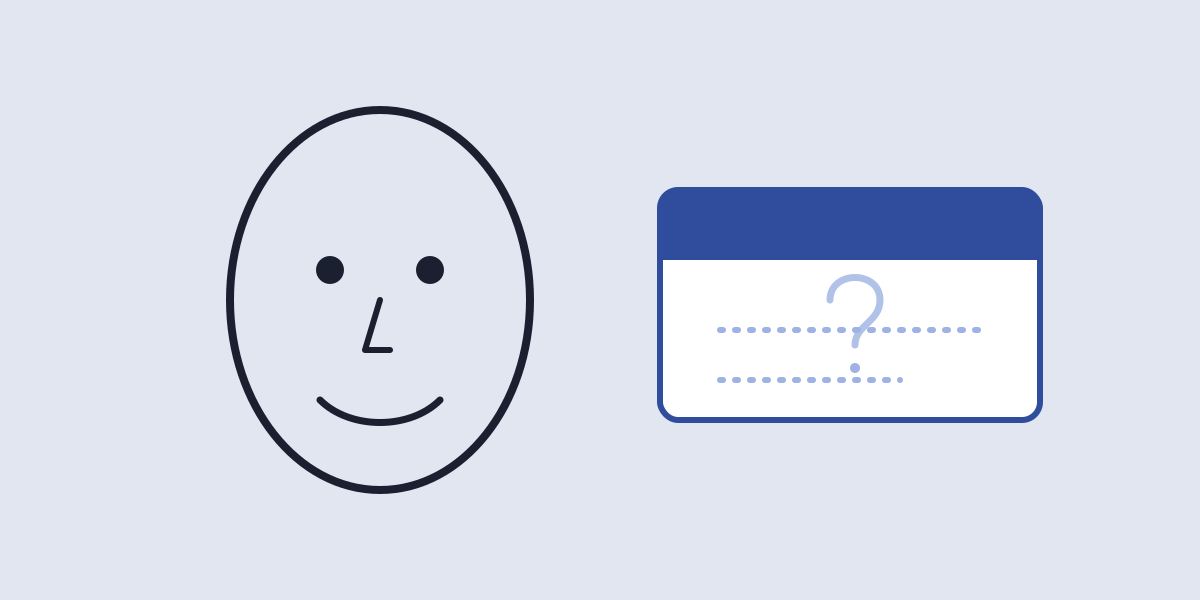
To understand déjà vu, it helps to know that memory researchers often separate two things: recollection and familiarity. Recollection is remembering the details of a specific past event, such as where you were and what happened. Familiarity is the simpler sense that something has been encountered before, even when you cannot say when or where. Normally the two go together. You see a face, it feels familiar, and then you remember that this is your classmate’s older brother.
Déjà vu may happen when the familiarity signal switches on without any matching recollection to explain it. One version of this idea, sometimes called the “Gestalt familiarity” hypothesis, suggests that a new scene can feel familiar because its layout resembles something you have seen before, even though you do not consciously remember the earlier scene.
Psychologist Anne Cleary and colleagues tested this using virtual reality. Participants toured a series of computer-generated scenes, then later toured new ones. Some of the new scenes shared the spatial layout of an earlier scene while being otherwise new: for example, a virtual lodge laid out like a previously toured shopping mall. When a new scene matched the layout of a previously viewed scene and people could not recall the earlier one, they gave higher familiarity ratings and reported déjà vu more often than for completely new scenes. The closer the match, the stronger the effect. This does not prove that every real-life déjà vu works this way, but it shows that the feeling can be produced in the lab by a forgotten resemblance.
What the brain is doing
Some of the strongest clues about the brain basis of déjà vu come from people with epilepsy. In a type called temporal lobe epilepsy, seizures begin in the medial temporal lobes, the inner parts of the brain’s sides that contain the hippocampus and nearby areas important for memory. Frequent déjà vu can be associated with focal seizures, particularly those starting in the medial temporal lobe, and sometimes it acts as a warning sign, or aura, that a seizure is beginning.
Some patients with epilepsy have electrodes placed inside the brain to help doctors locate where their seizures start. Researchers studying such patients found that déjà vu could be triggered more readily by electrically stimulating the rhinal cortices than the hippocampus itself. The rhinal cortices sit right next to the hippocampus and are thought to support the sense of familiarity. When stimulation did produce déjà vu, electrical activity in several medial temporal lobe structures became more closely synchronized, suggesting that déjà vu involves brief cooperation across a small network rather than one spot alone.
In people without epilepsy, the evidence is more indirect. One brain-scanning study compared healthy people who did and did not report déjà vu and found that those who reported it had less gray matter in a set of mostly medial temporal regions, and the less gray matter, the more often they had déjà vu. The authors offered a hypothesis about why, involving differences in how the hippocampus functions, but this is a correlation in one study, not proof of cause.
Is everyday déjà vu the same as seizure déjà vu?
Not necessarily. The 2024 meta-analysis concluded that everyday déjà vu and déjà vu linked to epilepsy are not the same uniform experience: when the researchers compared features such as frequency, duration and emotional tone, they found significant differences on several of them. Surveys also suggest that people who have both kinds can often tell them apart. For most people, occasional déjà vu is a normal quirk of memory and not a sign that anything is wrong. If déjà vu is very frequent, or comes with other unusual sensations, confusion or lost time, a doctor can help work out what is going on.
What is still debated
There is still no single agreed explanation for déjà vu. The 2003 review grouped the many proposed theories into four broad families: two mental processes briefly falling out of sync; a small neurological misfire; a memory-based account, in which something familiar goes unrecognized; and an attention-based account, in which you glimpse a scene without paying attention and then see it properly a moment later, so that the second look feels like a repeat.
Each idea has some support, and they may not be mutually exclusive. Studying déjà vu remains hard because it is rare in any given hour and cannot be switched on at will. Lab methods such as virtual reality produce something similar, but researchers are careful to note that a lab version may not capture everything about the real thing. Much of the direct brain evidence also comes from people with epilepsy, who may not represent everyone.
The takeaway
Déjà vu seems to arise when the brain’s sense of familiarity fires without a matching memory to explain it. Brain recordings point to the medial temporal lobes, especially the areas around the hippocampus that support familiarity. Lab studies show that a forgotten resemblance between a new scene and an old one can be enough to trigger the feeling. Rather than a glimpse of a past life or a prediction of the future, déjà vu may be a small, revealing glitch in the ordinary process your brain uses to decide whether something is new.
References
- A review of the déjà vu experience. Brown AS, Psychological Bulletin 129(3):394–413, 2003. doi:10.1037/0033-2909.129.3.394
- Non-ictal, interictal and ictal déjà vu: a systematic review and meta-analysis. Hadzic A, Andersson S, Frontiers in Neurology 15:1406889, 2024. doi:10.3389/fneur.2024.1406889
- Subjective distinguishability of seizure and non-seizure déjà vu: a case report, brief literature review, and research prospects. Cleary AM et al., Epilepsy & Behavior 125:108373, 2021. doi:10.1016/j.yebeh.2021.108373
- Familiarity from the configuration of objects in 3-dimensional space and its relation to déjà vu: a virtual reality investigation. Cleary AM et al., Consciousness and Cognition 21(2):969–975, 2012. doi:10.1016/j.concog.2011.12.010
- Rhinal-hippocampal interactions during déjà vu. Bartolomei F et al., Clinical Neurophysiology 123(3):489–495, 2012. doi:10.1016/j.clinph.2011.08.012
- Unveiling the mystery of déjà vu: the structural anatomy of déjà vu. Brázdil M et al., Cortex 48(9):1240–1243, 2012. doi:10.1016/j.cortex.2012.03.004